
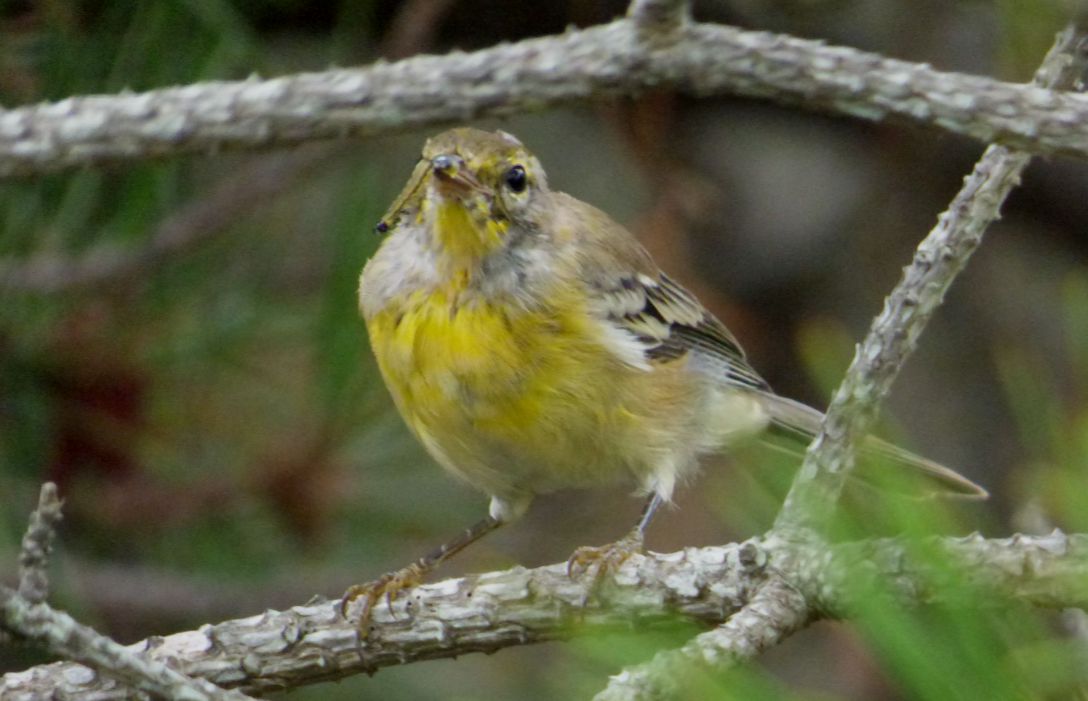
By Elliot Dziedzic
August 2026
After the spectacle and drama of peak spring migration dies down in late May, many of the colorful and active passerines continue north, along with raptors, shorebirds, and seabirds. But that doesn’t mean the birding season is over. Far from it. Many species remain in Provincetown throughout the summer to raise their young in the town’s beaches, forests, wetlands, dunes, and even backyards.
May naturally gets the most attention from birders and typically offers the greatest diversity of species. The numbers from eBird at two of Provincetown’s well-known migration hotspots, Foss Woods and Beech Forest, illustrate this dramatically. In May, birders reported 159 species at Foss Woods and 203 species at Beech Forest, with 509 and 2,653 observations, respectively. In June, however, only 61 species were reported at Foss Woods and 108 at Beech Forest, based on just 17 and 169 observations.
There are certainly fewer birds in June than during peak migration, but there are also far fewer birders—and that lack of effort can contribute to the dramatic decline in observations. Summer birding simply requires a different approach.
The behavior of our avian neighbors changes as well. Birds still need to feed and sing to defend their territories, but many become much less mobile, spending more time in consistent areas near their nesting sites. That makes June an excellent time to get to know the birds closest to home.
Your backyard birds may be the same ones waking you each morning and singing into the evening. This is also the time of year to watch for more secretive activity, including birds building nests nearby. Baltimore Orioles construct elaborate hanging nests, while Ruby-throated Hummingbirds build tiny cup-shaped nests using spider webs, plant fibers, and lichen. Despite their often-extravagant construction, even Baltimore Oriole nests can be surprisingly difficult to find. Secrecy is essential for protecting eggs and young from predators and nest parasites.
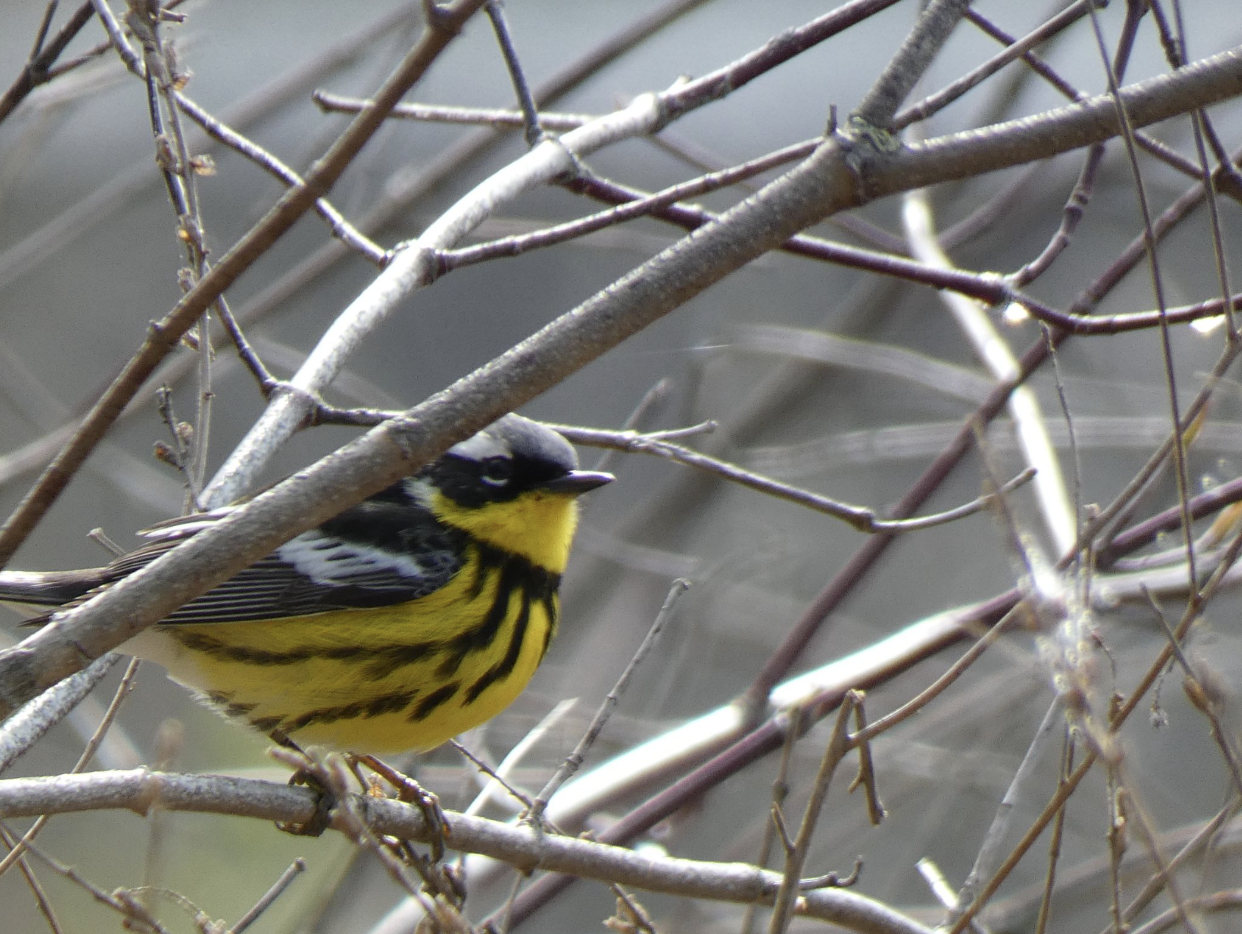
Magnolia Warbler
Getting to Know Provincetown’s Summer Birds
Our resident species include familiar birds such as Song Sparrows, Northern Cardinals, American Goldfinches, Downy Woodpeckers, and American Robins. These birds are present year-round and nest throughout Provincetown’s green spaces, sometimes remarkably close to human structures.
Many of the birds that nest here, however, are migratory. Some travel to Provincetown from as far away as the Caribbean and Central and South America. Baltimore Orioles, Red-eyed Vireos, and Ovenbirds, for example, winter as far south as Colombia before making the long and often treacherous journey north to the continental United States.
Some of the Cape’s raptors also undertake impressive migrations. Broad-winged Hawks and Ospreys spend only part of the year here. Ospreys, which rely primarily on fish, and Broad-winged Hawks, which prey on reptiles and amphibians, migrate south to warmer climates before returning north to breed. Red-tailed Hawks, by contrast, remain on the Cape year-round. Their diet of squirrels and other mammals allows them to survive the colder months.
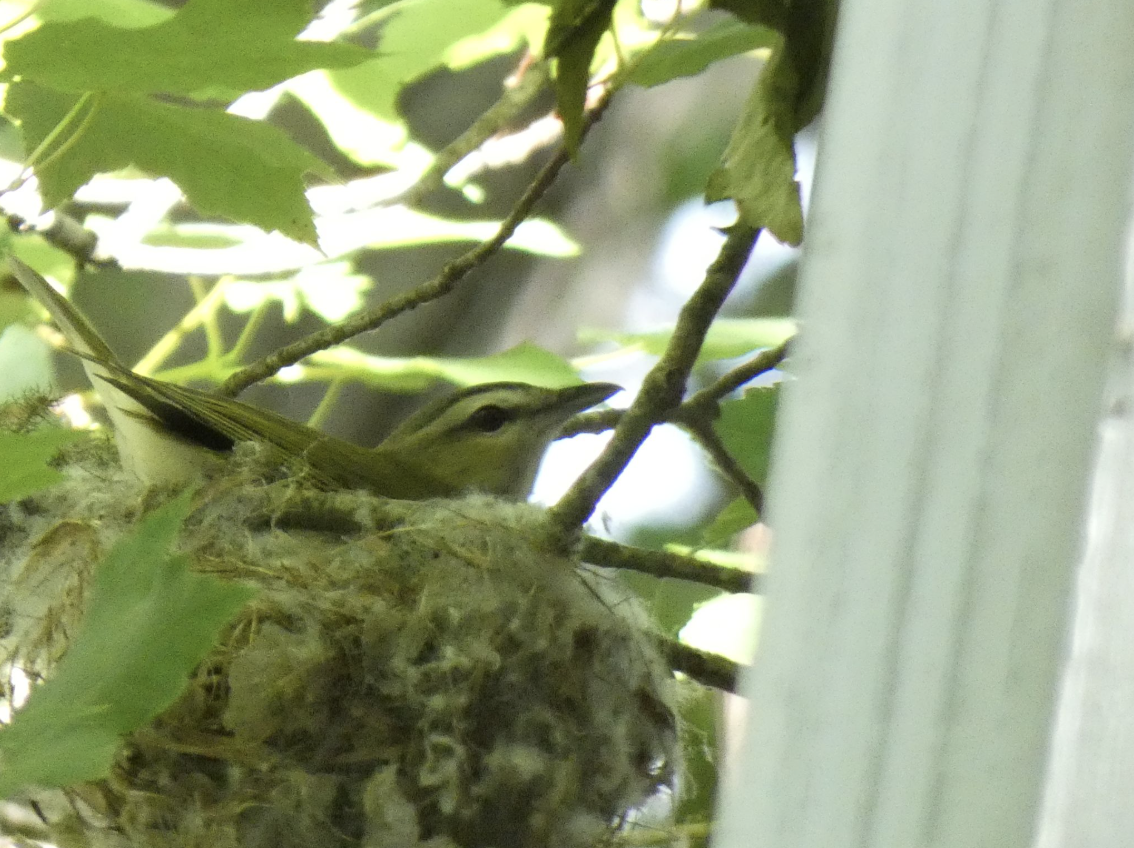
Red-eyed Vireo Nest, Provincetown
Look Beyond the Beach
The threatened Piping Plover and Least Tern, which nest along our beaches, understandably receive a great deal of attention, protection, and sometimes controversy. But the birds of Provincetown’s uplands are equally worthy of our attention.
The Provincetown Greenway—particularly the Old Colony Nature Pathway—is an important stopover for many species during spring and fall migration, but it is also valuable habitat throughout the summer. Native plants and uninterrupted stretches of vegetation provide birds with food, shelter, nesting materials, and places to raise their young.
Many bird species require significant areas of connected green space to thrive. Protecting habitats such as those found throughout the Greenway is therefore essential to maintaining Provincetown’s diverse bird population—not just during migration, but throughout the year.
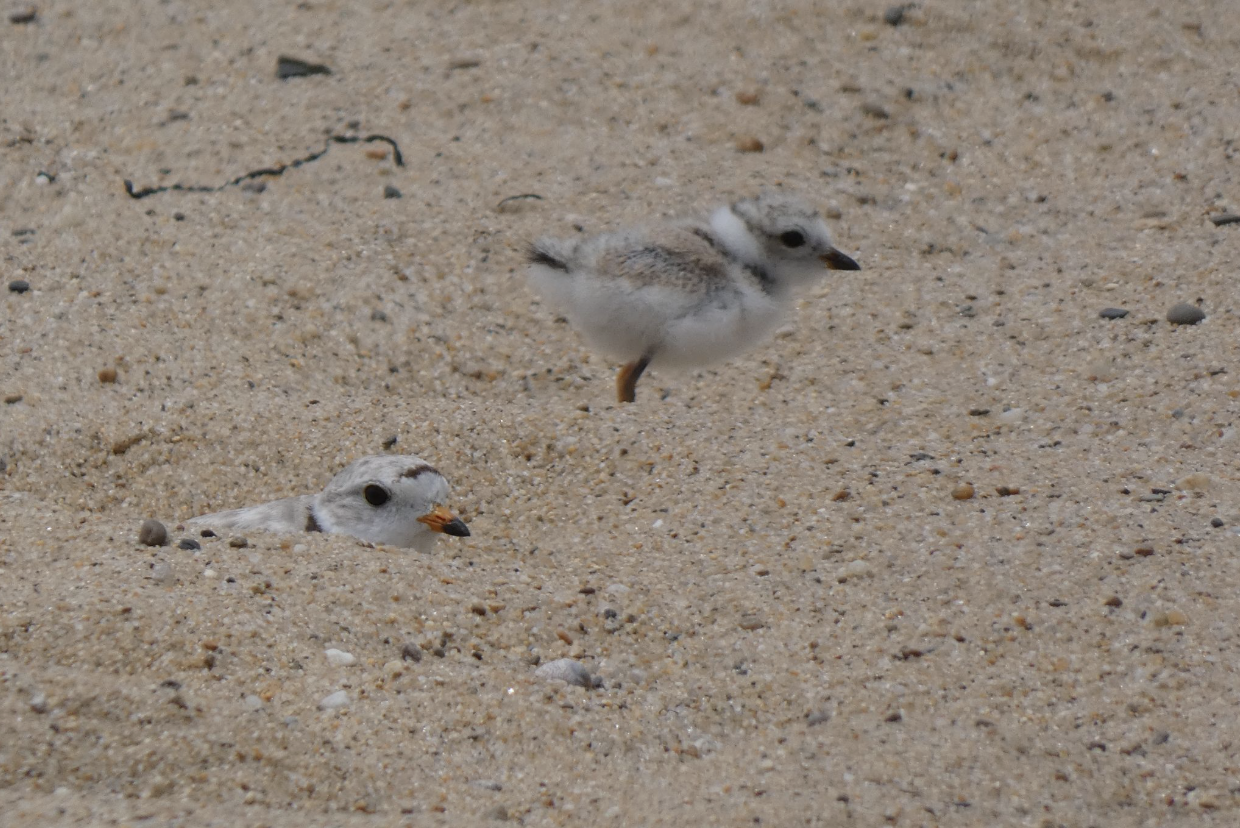
Piping Plover chick and parent in Provincetown
Breeding Birds on Conservation Lands
This June, at least 19 species were documented nesting on properties owned by the Provincetown Conservation Trust or protected by a conservation restriction held by the PCT. They included:
Downy Woodpecker, Great Crested Flycatcher, Black-capped Chickadee, Tufted Titmouse, Red-bellied Woodpecker, Northern Cardinal, Gray Catbird, American Robin, Red-breasted Nuthatch, White-breasted Nuthatch, Mourning Dove, Baltimore Oriole, Blue Jay, Red-eyed Vireo, Song Sparrow, Ovenbird, Common Yellowthroat, Pine Warbler, and Chipping Sparrow.
More than 20 additional species—including Broad-winged Hawk, Ruby-throated Hummingbird, Yellow Warbler, Wood Duck, and Blue-gray Gnatcatcher—were observed in circumstances suggesting that they also nested earlier in the year, near conservation properties, or successfully raised young, although nesting could not be conclusively documented.
There are many ways to confirm that a bird is breeding. Birders might find an active nest, observe a bird constructing one, see adults carrying nesting material, discover recently fledged young, or watch parents feeding their offspring. Territorial behavior, courtship, mating, prolonged presence, and persistent singing can also provide important clues. Seeing a pair of birds in appropriate habitat during their breeding season is another indication that they may be nesting nearby.
If you discover a nest or encounter fledgling birds on the ground, however, the best thing to do is generally to leave them alone and observe from a distance. Human interference can agitate parents and potentially draw attention to vulnerable young.
And don’t assume a fledgling on the ground is helpless. Most songbirds leave the nest before they are fully capable of flying and foraging independently. Their parents continue to feed them as they develop their flying and survival skills. Those familiar, high-pitched, persistent begging calls are often the sound of young birds announcing their location and asking for their next meal.
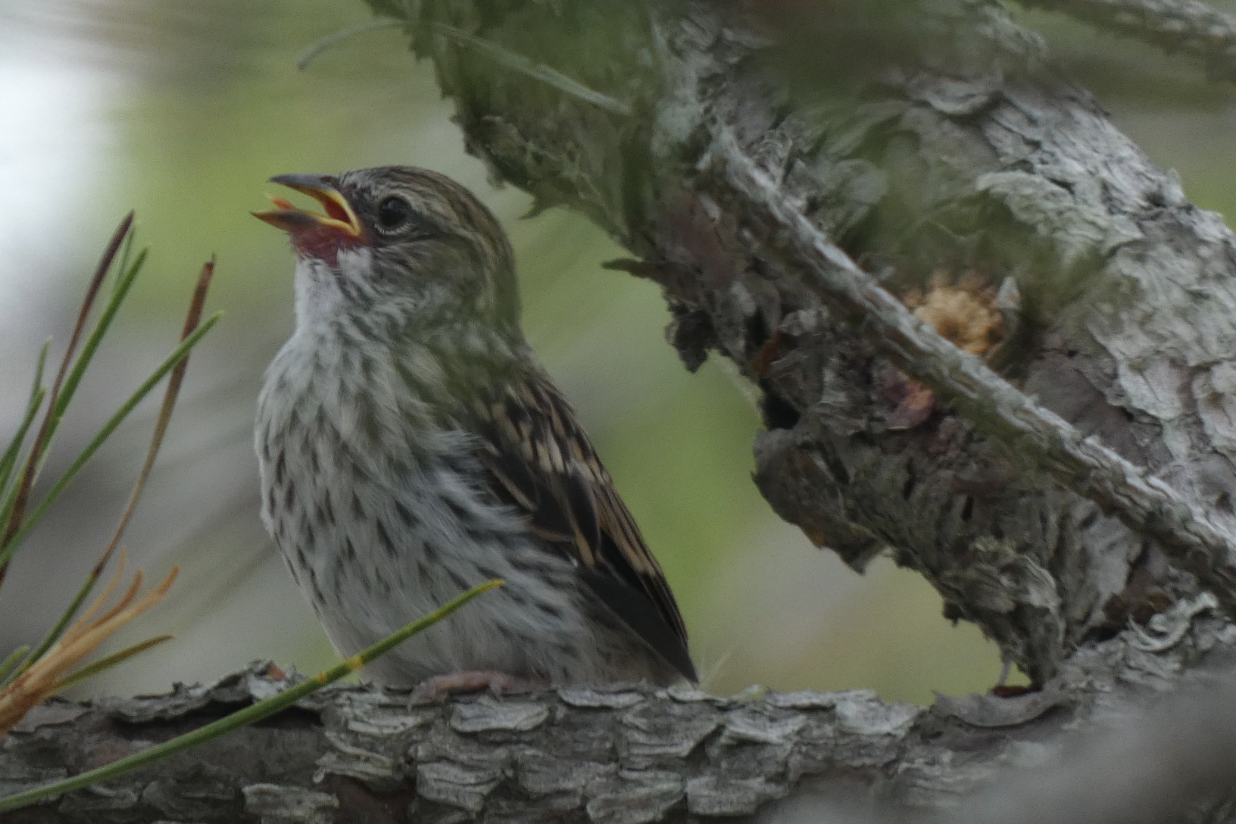
Fledgling Chipping Sparrow. Provincetown.
Make Summer Your Birding Season
Provincetown is an extraordinary place to experience birds year-round. Every season offers opportunities to discover new species, behaviors, and plumages.
Spring and fall migration may be the most exciting times for many birders, when new species arrive almost daily and the total number of species is at its highest. But summer offers something migration cannot: the opportunity to slow down and observe the intimate lives of the birds that call Provincetown home.
June and the rest of the breeding season are not necessarily about seeing the most birds. They are about seeing birds differently.
It is the season of nest building, eggs hatching, chicks fledging, territorial disputes, courtship, and songs filling the woods and neighborhoods from morning through evening. It is also an opportunity to discover that the birds you pass every day are not simply visitors—they are neighbors.
So during summer, don’t put away your binoculars when spring migration ends. Walk the Greenway. Explore Foss Woods. Visit Beech Forest. Look around your own backyard. Listen for familiar songs and watch for the subtle movements of birds carrying food or nesting material.
The more time we spend looking, the more birds we will find—and the more we understand and appreciate the habitats they depend upon, the more committed we become to protecting them.